Wastewater network SL-RAT inspections
One of the tools we use to check the condition of our wastewater network is a sewer line rapid assessment tool, known as SL-RAT.
These quick inspections give us a better understanding of the condition of the network in specific areas, which helps us to plan and focus our maintenance efforts where they are most needed.
Most importantly, SL-RAT inspections help identify possible future blockages in pipes, before they back up or overflow. By detecting potential issues early, we can take more immediate action such as cleaning pipes and removing obstructions.
SL-RAT inspections are also used after cleaning pipes to check the effectiveness of the cleaning.
How do SL-RAT inspections work?
The SL-RAT (Sewer Line Rapid Assessment Tool) consists of two small devices - a transmitter and a receiver - that are positioned inside manholes, at either end of a wastewater pipe.
The transmitter sends sound through the pipe and the receiver listens at the other end, analysing how the sound travels. If the sound passes through clearly, the pipe is open and free of blockages. If the sound is blocked, muffled, or distorted, this indicates there might be a build-up or blockage in the pipe.
The equipment itself stays above ground and does not go into the wastewater.
Most sections of pipe only take a few minutes to check and deliver real-time insights into the pipe’s condition.
How will I know when SL-RAT inspections are happening near me?
If we’re carrying out SL-RAT inspections in your neighbourhood, you might see signage in the area, get a knock on your door and/or a receive a calling card or letter.
While these types of checks are more commonly carried out in commercial and industrial areas, we also do this in residential areas from time to time.
What will I see and hear during an inspection?
During an inspection you will see our team place one device at each of two neighbouring manholes. They temporarily remove the manhole covers, run the test and safely replace the covers.
If you’re nearby you might hear some faint musical tones, chimes, or buzzing sounds coming from the equipment. The inspections are completely non-invasive and only take a few minutes per section.
How you can help prevent blockages
While SL-RAT inspections help monitor the condition of our wastewater network, we all have a role to play in protecting our precious waterways. Three key things we can all do to help:
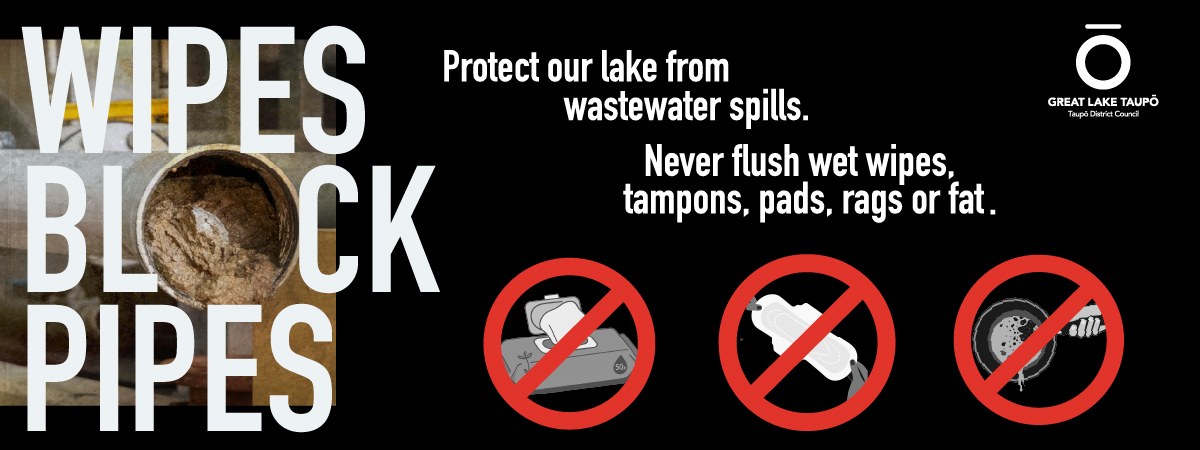
- Only flush the 3 Ps: pee, poo and toilet paper.
- Put wet wipes, sanitary products, nappies, cotton buds and other rubbish in the bin, even if the packaging says they are flushable.
- Let cooking fat and grease cool and harden, then put them in the rubbish. Do not pour them down the sink.
By taking care of what goes down your drains, you can help reduce blockages and overflows and protect our homes, neighbourhoods and environment.
Contact us
If you have any questions about SL-RAT testing, please contact Taupō District Council on 07 376 0899 or 0800 ASK TDC (0800 275 832).