

Preventing pollution and flooding
Help look after our stormwater system
While our stormwater infrastructure is designed to protect you and your property from flooding, in a severe weather event we need your help to reduce the chance of flooding.
You can help by:
- Picking up rubbish and leaves
- Clearing your drains of other materials
- Never dumping garden waste near water
Managing stormwater at your place
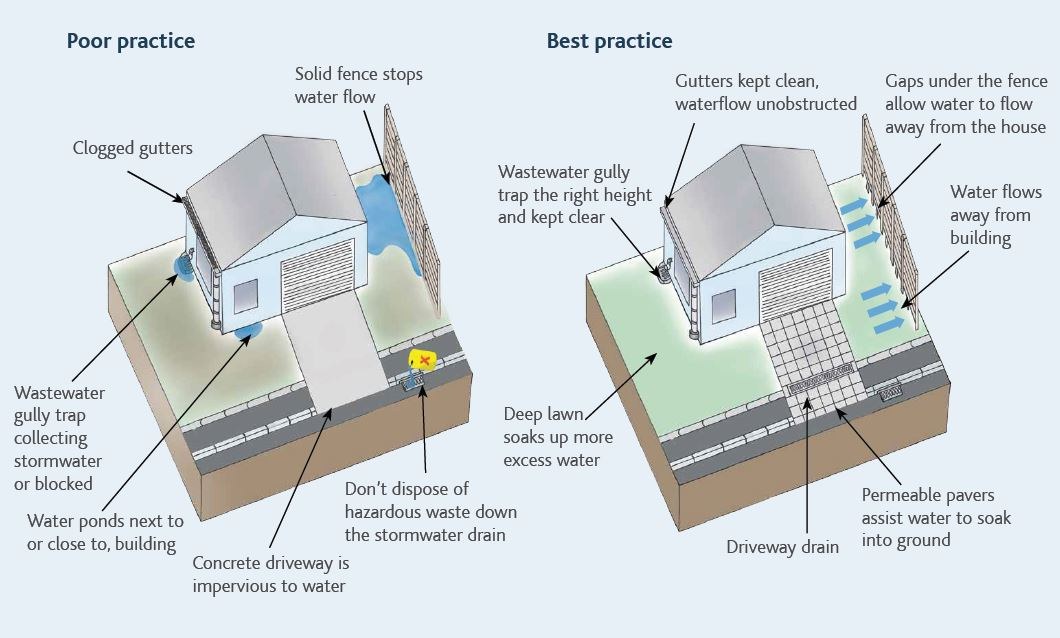
To prevent drainage problems or flooding on your property, check and clear the drains on your property. It is important to remember that managing drainage on a property is the responsibility of the landowner.
Also, what flows into your drains will flow into the public stormwater drainage network or streams before continuing to the lake or river, so being careful about what gets washed down the drain helps keep our lakes and rivers clean and safe.
Run-off from your neighbours
You are only obliged to accept stormwater runoff from properties which would naturally discharge onto your property. Any improvements to properties must ensure that extra stormwater is controlled and does not cause a nuisance or damage.
If your neighbour’s runoff is damaging your property, we recommend you take the matter up with your neighbour directly. Council will only intervene where the runoff is the direct consequence of construction that Council has given consent to.
Please be aware that if you do any development on your property it may increase the amount of stormwater flowing onto a neighbour's property. Raising the ground level, increasing the impermeable area or blocking a flow path are all likely to impact someone. You will either need to stop that activity or prevent the extra stormwater flowing across your boundary.
Council recommends you take time to talk to your neighbours about any flooding problems you may be experiencing. In many cases, a resolution can be reached that will satisfy everyone’s needs.
You may need to consult a lawyer so that any agreement you make with your neighbour is legally enforceable and appropriate for future owners if the land should be sold.
Protecting your home from surface water
What is overland flow?
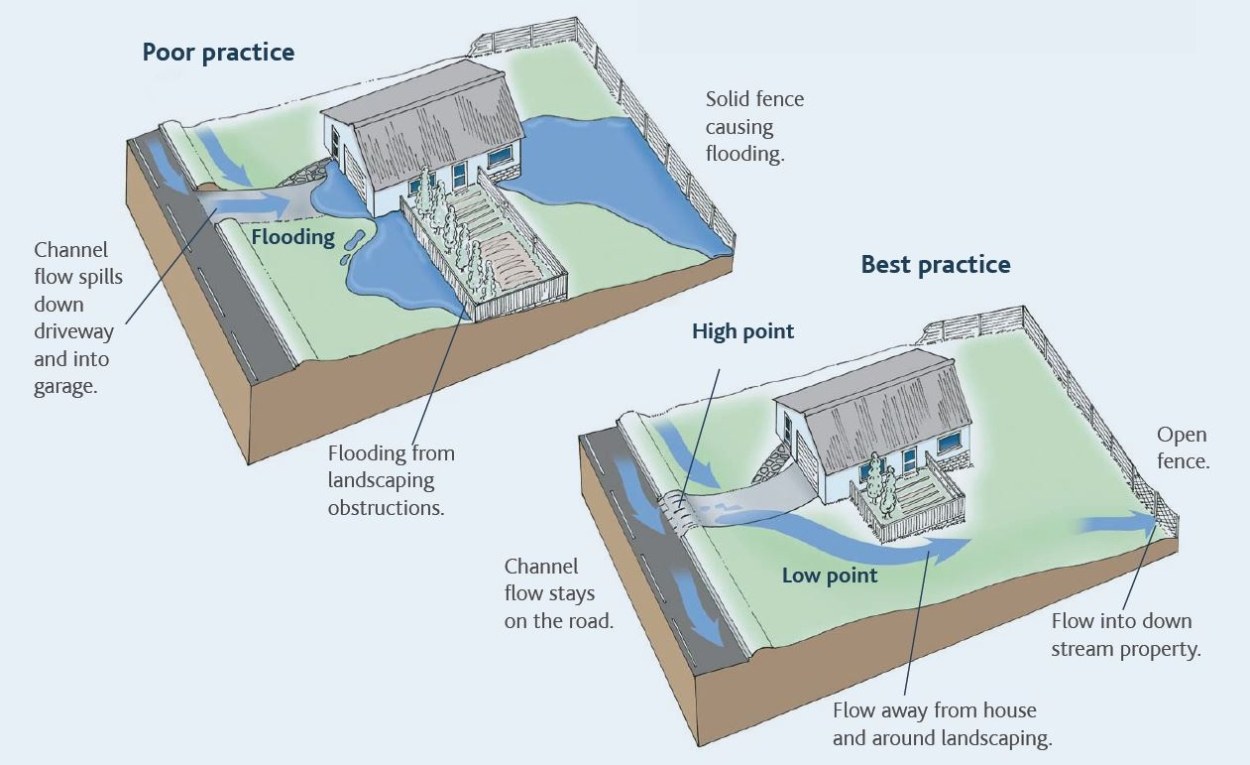
Overland flow is surface water resulting from rainfall, which can cause flooding of properties and houses if not properly managed.
Why is it important?
Taupo District is prone to bursts of intense rainfall which causes significant amounts of surface water. This surface water will naturally concentrate and flow downhill to the river or the lake. Due to good drainage throughout the district there is only a limited piped network available for SW, rainfall greater than a 10 year event will collect on the ground, the resulting surface water (overland flow) takes its natural course downhill, often across private property.
Overland flow is a natural occurrence and can be effectively managed across private property by following some simple guidelines.
What you can do?
- Avoid altering the ground level around an identified overland flow path. Contact us to find out if your property is affected by an overland flow path.
- Ensure your vehicle crossing has sufficient ‘roll-over’ to prevent water from the road channel from flowing down your driveway.
- Ensure your driveway and other paved surfaces have appropriate shape and levels to direct surface flow away from your garage and house.
- Avoid blocking the path of overland flow at both the upstream and downstream boundaries of your property.
- In general, protect your home by ensuring ground levels around your home direct surface flow away from your house.
- If your property has a drainage easement over it there are additional responsibilities that may apply. Proper management and maintenance of drainage easements is critical to ensure the effective performance of the wider stormwater network, for more information contact us.
Don’t connect your gutters to our wastewater network
A cross connection is the diversion of stormwater into the wastewater network. A common source is a downpipe diverted into the gully trap (a drainage vent usually covered with a small grating and located against the outside of a house, near the kitchen, laundry or bathroom).
Stormwater in the wastewater network can overload our wastewater treatment plants, which could force us to discharge partially treated water to the environment so the plants can keep up. Wastewater connections to stormwater pipes have an equally harmful impact.
One way to help keep our streams, rivers and coast clean for generations to come is to ensure there are no cross connections on your property – they are illegal.
It is the homeowner’s responsibility to ensure their drainage pipes connect to the right system.
Household products kill fish
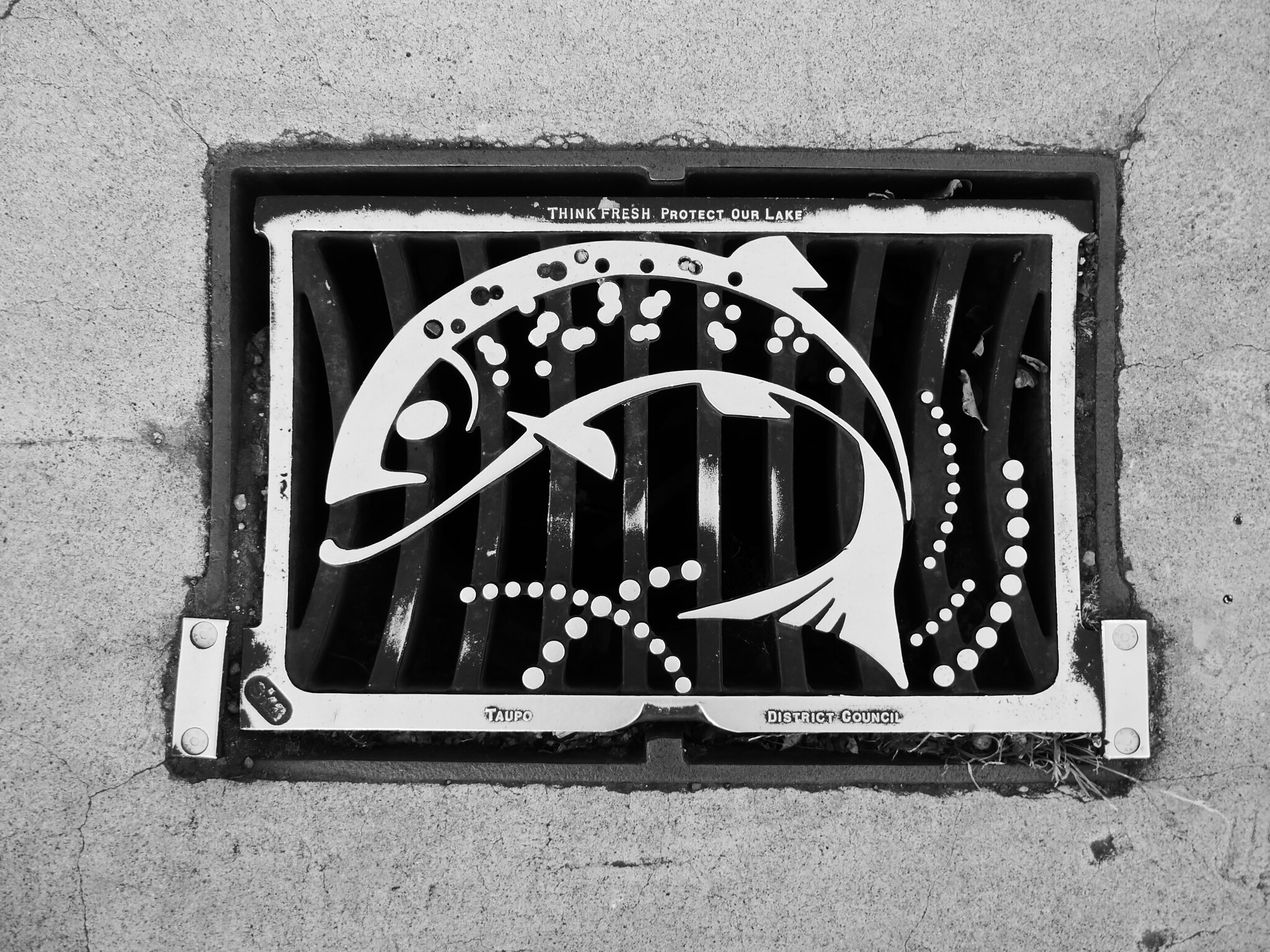
Stormwater inlets around the district are easily identified by the distinctive aluminium trout symbols (as pictured above). The fish are a visual reminder that whatever washes off streets and footpaths goes down the drains and eventually ends up in the lake. Hazardous household products can also enter our stormwater network when they are poured into drains outside your property.
Disposed oils, detergents, paint, solvents, pesticides and other common household products contain chemicals that are toxic to fish. Even small discharges poison our waterways.
Stormwater runs through a network of pipes before being discharged into nearby streams, rivers or Lake Taupō. We have consents from Waikato Regional Council to do this. Because there is minimal treatment systems installed on stormwater runoff it is vital that any substances that could be harmful to our waterways are not discharged down our stormwater pipes.
Do not pour anything into a stormwater drain or onto the ground that could be toxic to wildlife. This includes:
- Paints and solvents
- Pesticides
- Motor oil, diesel and petrol
- Washing detergent
- Degreasers and disinfectants
- Drain and toilet cleaners
- Dry cleaning agents
- Household cleaners.
Here’s 10 things you can do to prevent polluting stormwater runoff:
- Never tip paint or chemicals out near a drain
- Direct downspouts away from paved surfaces
- Vegetate bare spots in your yard
- Compost your yard waste
- Picking up your animal poo
- Use least toxic pesticides, follow labels and learn how to prevent pest problems
- Consider starting a rain garden
- Take your car to a car wash (or wash it on the lawn) instead of washing it in your driveway
- Check your car for leaks and recycle your motor oil.
Report environmental incidents
If you see something that looks wrong - different to what you normally see at that spot - it could be the result of an environmental incident. To report environmental incidents in the Taupō District or wider Waikato region, like harmful pollution in our waterways or offensive odours, report it to Waikato Regional Council.
Report an environmental incident on the Waikato Regional Council website
