Drinking water network
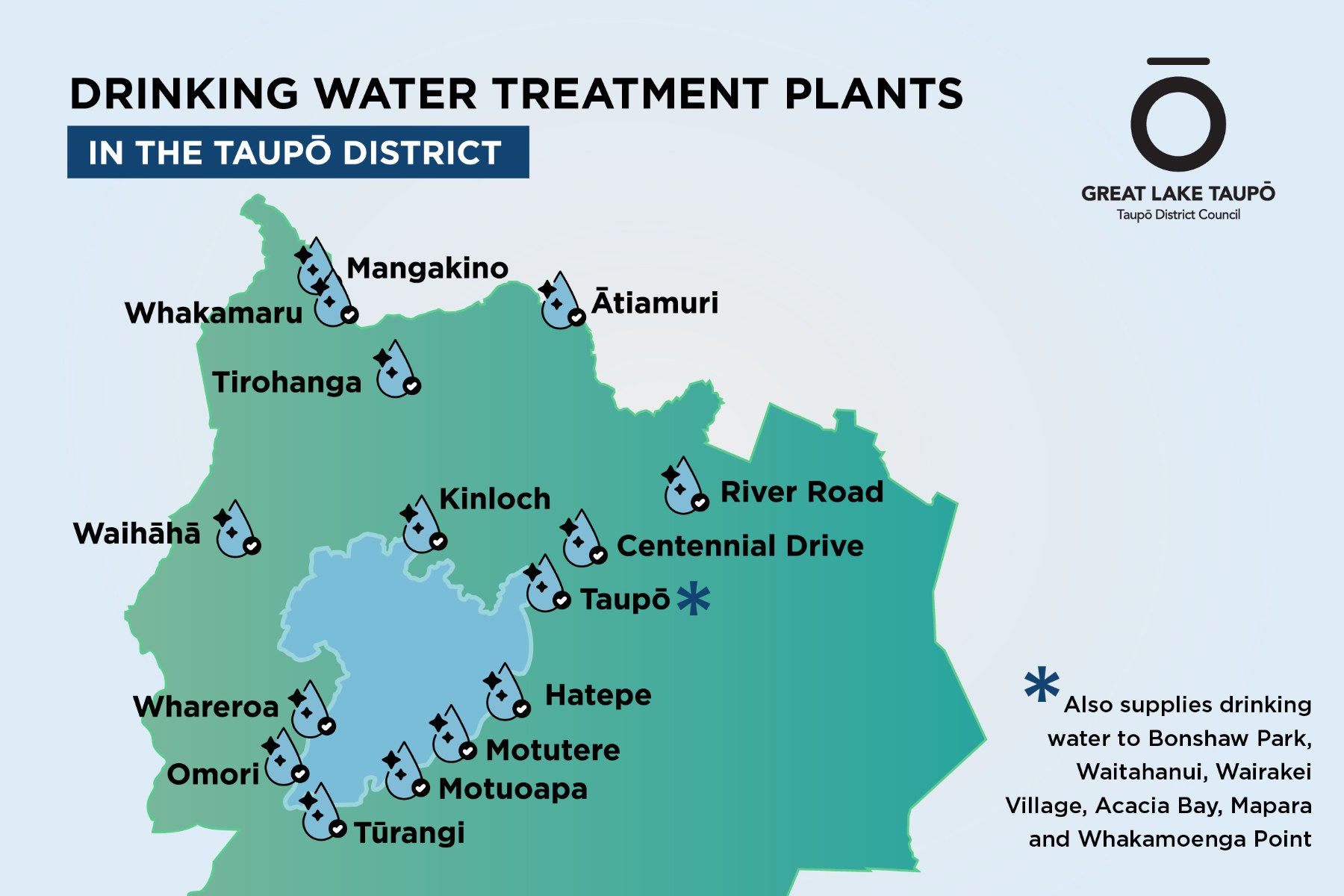
We own and operate 15 separate drinking water schemes around the Taupō District that source, treat, store and deliver safe drinking water.
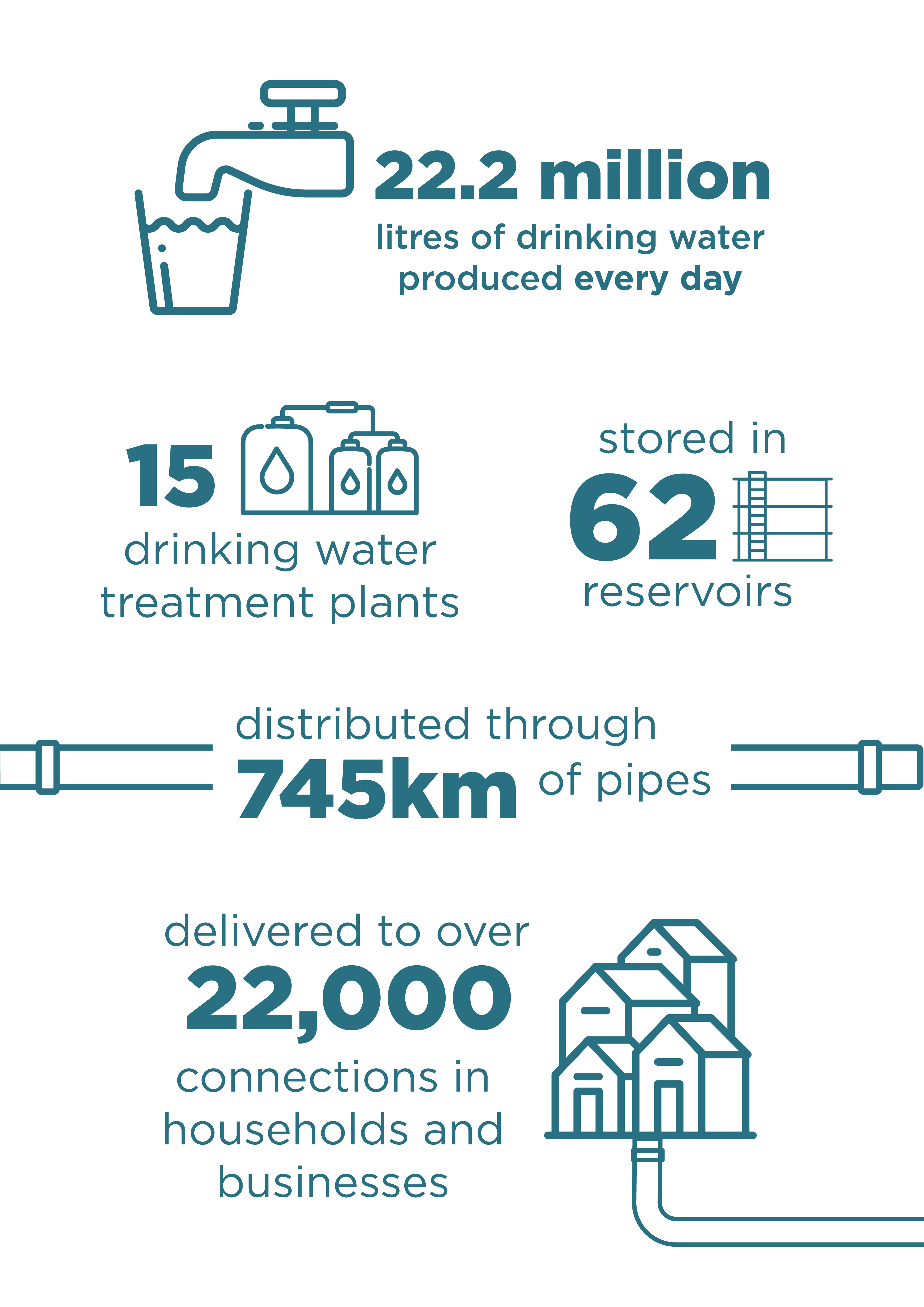
Across our 15 water schemes and treatment plants, we produce 22.2 million litres of drinking water every day. After being treated, drinking water is stored in 62 reservoirs, moved through 745km of pipes and ultimately delivered to over 22,000 connections in households and businesses across the district.
Water has limits
While the numbers tell a story, they don't say what we all need to understand - that water is a limited resource.
Water is allocated for household, business and industrial use through resource consents. Our consents, managed by Waikato Regional Council, set rules for how much water we can take from lakes, rivers, bores and other sources. They're designed to help make sure water is managed responsibly and that we will have enough water for future generations.
As a popular tourist destination, our population soars over the summer holidays and on long weekends. This puts added pressure on our infrastructure as more people use more water, especially over the summer.
With limits on how much water we can source, treat, store and deliver, we need to carefully manage all these parts of the network - and we all have a role to play in that.
Treatment plants
Our 15 drinking water schemes across the district are made up of treatment plants, pump stations, storage reservoirs and pipes, known as water mains.
At the heart of this essential infrastructure are the treatment plants where all the work takes place to make sure water is safe for drinking, before it's piped to your home or business.
Taupō water treatment plant
Our largest water treatment plant is on the shores of Lake Taupō, New Zealand's largest lake. It supplies drinking water to the main Taupō town and several nearby communities, including Bonshaw Park to the east, Acacia Bay and Whakamoenga Point to the west, north to Wairakei Village and south to Waitahanui.
A unique feature of the Taupo water treatment plant is that it combines the functionality of a working plant, with a rooftop viewing platform overlooking the lake and snow-capped Central Plateau mountains.
The platform blends into the natural environment and connects to the Great Lake Pathway (pictured below) that runs along the Taupō lakefront.